
Agentic Commerce is Here: Why Brands Need to Monitor Their Answer Engine Visibility Now
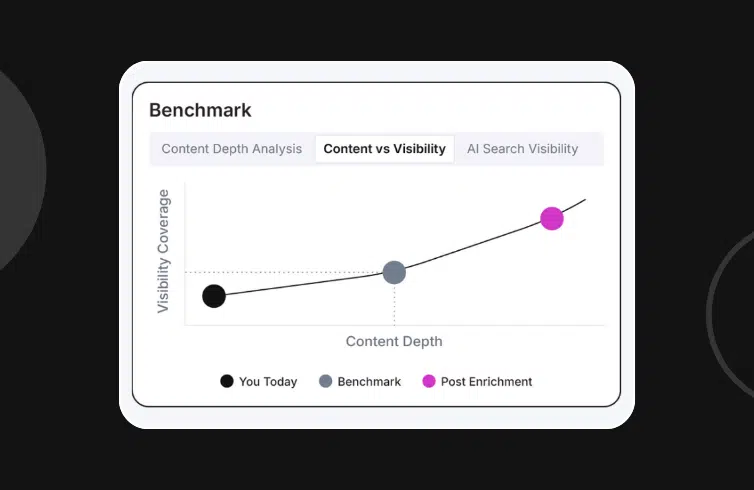
AI Search is the thin wedge holding the door open for agentic commerce. It’s shifting the behavior for millions of consumers and quickly becoming the starting place for product research and discovery. From ChatGPT to Google’s AI Mode, Amazon Rufus, and Perplexity, product research is now happening inside answers — not just among blue links or category pages.
Shopper intent has gone clickless. And this is happening at scale. It’s reported that Google’s AI Overviews reach 2B+ people monthly. On ChatGPT, roughly 2% of daily prompts, some 52M, are related to purchasable products (Euromonitor International), making ChatGPT the second-largest e-commerce site on the planet.
It makes answer visibility a challenge no brand can afford to ignore, and it’s why we’ve built capabilities for monitoring catalog visibility into our new Product Agent.
Product Agent: monitor visibility
To win in this new era, brands have to master two activities:
- Monitor — benchmark “answer visibility” against category leaders
- Activate — optimize catalog data to improve placement in AI Search answers
In this blog, I’ll focus on Product Agent’s Monitor package and why it’s critical for brands and retailers to start understanding their “answer visibility” now. The Monitor package helps brands continuously measure how their catalog, and their competitors’, show up across AI Search engines. It’s the first step toward building agentic commerce-ready product catalogs.
Why monitoring matters: shoppers are already using AI to shop
AI assistants have become real shopping tools, not experiments.
For example, Adobe found that 39% of U.S. consumers have used generative AI for online shopping (Adobe Blog). And 53% plan to use gen-AI for shopping this year (EMARKETER).
In Shopify’s third-quarter earnings call, President Harley Finkelstein commented, “Since January, we’ve seen AI‑driven traffic to Shopify stores up 7x, and … orders attributed to AI searches up 11x.” He added that a Shopify survey found 64% of shoppers expect to use AI during the holiday season (PYMNTS).
These stats point to the behavior shift taking place. Shoppers are prompting answer engines with real, purchase-driven queries like:
“I run in the Pacific Northwest. Find the top trail running shoes good for the Oregon area that have a wide toe box and are perfect for long runs with a natural gait and a midfoot strike.”
This is live, intent-rich demand happening inside AI Search engines and represents a clear shift from the hunting and pecking with keywords of organic search behavior. And the intent captured in these answers is driving higher quality traffic directly to your PDPs.
Adobe also found that AI Search ecommerce visits show –23% lower bounce rate, +12% more page views, and a conversion-gap narrowing: from –43% in July 2024 to –9% by February 2025 (Search Engine Land).
What shoppers ask: rich intent, ready for monitoring
Common apparel-related prompts reveal exactly what product attributes LLMs must see to surface your brand:
- Occasion & Style: “What to wear for a rooftop party?”, “capsule wardrobe for travel”
- Price & Availability: “Best linen dress under $100”, “what’s available in size M in stock”
- Fit & Sizing: “How does Brand A’s medium compare to Brand B’s small?”, “Which jeans are best for tall women?”
- Material & Quality: “Best breathable fabrics for summer dresses”, “Durable backpacks for travel”
Every one of these queries is powered by structured product data — attributes, reviews, pricing, imagery — that AI/answer engines rely on to understand and rank your offering.
What’s at stake: first mover opportunity
Today’s LLMs are where SEO was 15 years ago: an emerging channel that will soon define visibility. Monitoring is how brands start building familiarity in this new ecosystem.
Those who understand their “answer visibility” first will shape how AI engines see their products and whether they get surfaced when shoppers ask.
How Product Agent’s Monitor package improves catalog data
With the Monitor package, you will track and benchmark:
- Share of Answer / Share of Citation by category/query-type
- Intent Signals that correlate with answer inclusion and ranking
- Attribute depth and quality versus category leaders
- Structured data health (offers, reviews, FAQs, imagery)
- Visual readiness — image quality, variety, metadata completeness
By measuring these inputs, you uncover how AI Search engines interpret and represent your products and where your competitors may be winning. The best part is that Product Agent will give you recommendations on how to improve your product data and supercharge it for intent.
Begin with an assessment
We’ve prepared an AI Search Visibility Assessment for brands and retailers to gauge visibility currently and understand how Product Agent’s Monitor package can drive product catalog placement. It’s a simple process and takes minutes to receive results. Get your AI Search Visibility Assessment today.

Laurence Nixon
Director, Product Marketing @ fabric
Related Content