
The AI Merchandiser, Act 1 - The Battle for Access
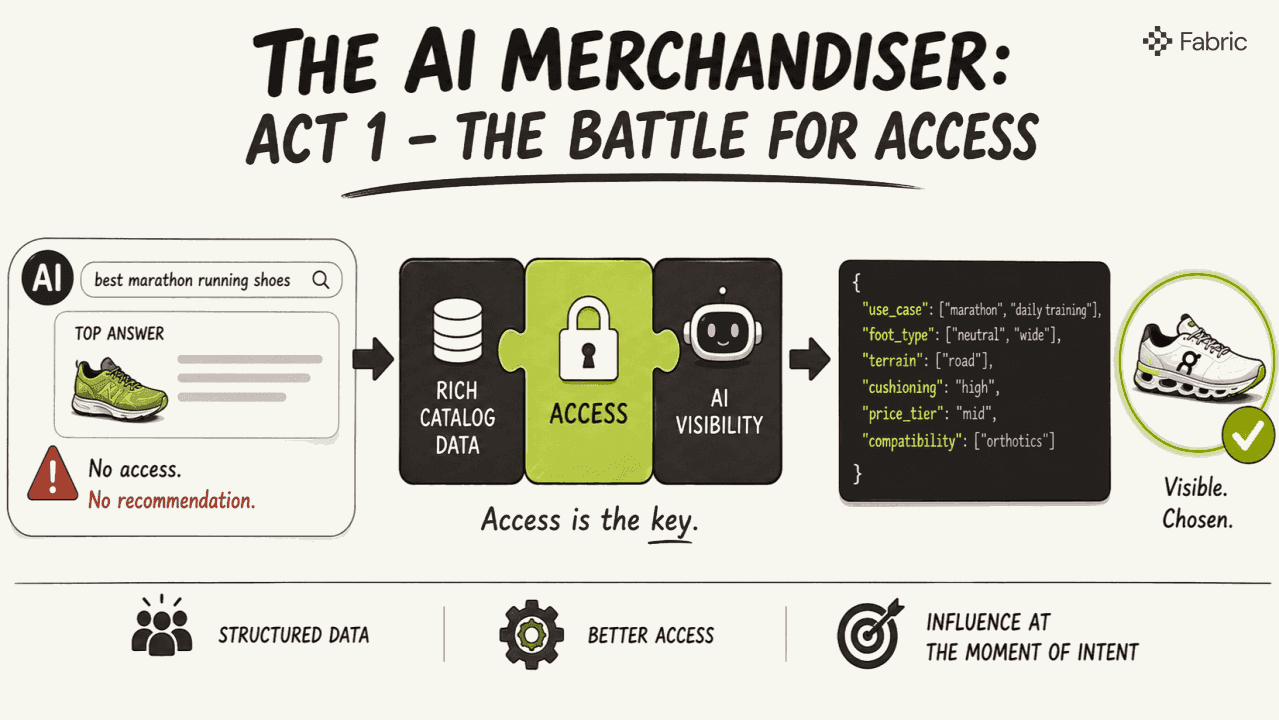
As influence shifts from merchant sites to AI, the merchandiser's first job is ensuring AI shopping agents can access their catalog through rich, structured product data.
[FADE IN]
We hear frantic keyboard clacking. The camera pulls back to reveal Customer stressing. The marathon he committed to after a half dozen beers and a glass of wine with friends is in four weeks. The grubby cross-trainers he wears to school pickup won’t cut it. He needs new trainers, pronto.
On screen we see Customer enter a long, context rich prompt:
“I have four weeks to train for a marathon. I’m a casual runner, slightly overweight and need something that will maintain structure well into the race. I have a long gate and wide feet. I want runners with lots of cushion. What are the best marathon running shoes that will help me train and finish?”
Within seconds, AI queries two dozen sources, analyzes results for Customer context and returns three options. Customer selects the On Running Cloudmonster 3 from one of five price options.
Alas, he chose the option directly from On Running because the pair is in stock and offers two-day shipping.
The camera pans back, Customer exhales and pumps his fist: “Let’s go!”
[FADE TO BLACK]
This Oscar worthy screenplay illustrates the change in behavior driving merchants to develop agentic commerce strategies. Product discovery now happens with AI. And this is reinforced with every Adobe traffic report, every Shopify investor call and every announcement from Google. It’s driving massive demand from merchants to get agentic commerce ready.
It’s why we’ve been quiet at Fabric over the past six weeks. We’ve been heads down working shoulder to shoulder with merchants onboarding their catalog data to Product Agent to drive AI visibility and improve conversion. And we’ve learned a lot.
This post is the first of a series where I’ll share insights we’ve developed working to get our merchants visible to search agents. And it all begins with Access.
THE PROBLEM
See, the problem with most catalogs existed long before ChatGPT and Gemini were a thing. The difference between then and now is in who, or perhaps what, is searching for products and where merchandisers historically influenced decisions.
While they used to cover for a “no results” site search due to sparse product data and poor categorization via offers, cross-promotion, “top items” lists, discounts, etc. Today, customers prompt AI, are given one answer and it better return their products.
The first act in this allegory is titled “The Battle for Access” because it’s now a primary function of merchandisers: enabling LLMs to access their catalog through rich, structured data. Access is the key to visibility.
ACCESS GRANTED
AI systems need to understand the intended use case. Let's stick with my marathon example. The fit profile, such as wide or narrow, the terrain, the cushioning level, the price tier, and even compatibility with orthotics or gait types are critical context for LLMs trying to match customer intent offered in a prompt with available products. This isn’t about writing better descriptions, it’s about encoding structured meaning that machines can interpret consistently.
Sample Structured Attributes:
{
"use_case": ["marathon", "daily training"],
"foot_type": ["neutral", "wide"],
"terrain": ["road"],
"cushioning": "high",
"price_tier": "mid",
"compatibility": ["orthotics"]
}
As we dig into more customer use cases we've noticed a shift among the partners we work with day to day: merchandisers are becoming more technical. As the point of influence moves offsite into AI discovery, category owners, “detailers” (as one customer calls them) or merchandisers are studying and experimenting in an effort to understand the new playing field.
If merchandisers are to influence customers at the moment of intent then they better learn how to structure data for access. And this is where Product Agent is lending a hand and streamlining their work effort.
If you liked this post, stay tuned for “The AI Merchandiser: Act II - The Winning Strategy” where I’ll outline specific learnings that are leading to success.